
168 Japanese lawmakers visit Yasukuni Shrine
Rabu, 24 April 2013 01:09
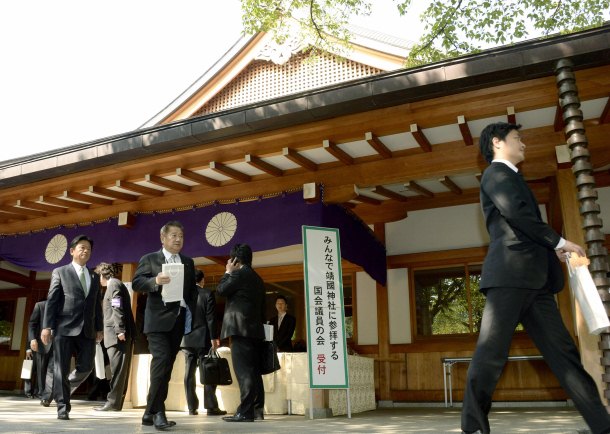
(TOKYO-Kyodo) A nonpartisan group of 168 Japanese lawmakers visited the war-related Yasukuni Shrine in Tokyo on Tuesday, in a move that may stir a further backlash from Japan's neighboring countries at a time when ties with them have soured over territorial disputes.
The visit followed those by three Cabinet ministers and offerings made by Prime Minister Shinzo Abe over the weekend.
"It is common in any country that a parliamentarian offers prayers for the souls of the departed war heroes who gave their lives up in defense of his or her country, so it's a very natural act," the Liberal Democratic Party's upper house member Hidehisa Otsuji, the group's head, told reporters after the visit.
"The angry reactions (of China and South Korea) are not readily comprehensible," he added.
The shrine visit by the three ministers and the offerings by Abe angered China and South Korea, both of which suffered under Japan's wartime aggression and view the shrine as symbolic of Japanese militarism.
South Korean Foreign Minister Yun Byung Se canceled a trip to Japan while China complained to Japan of "negative behavior."
The number of participating lawmakers was the largest since the group started keeping records in 1989, apparently because more conservative politicians, mainly from the LDP and the Japan Restoration Party, won parliamentary seats in the general election in December.
The previous high was in April 1997 when 152 parliamentarians visited the shrine. It is the first time since October 2005 that the number has topped 100.
The group visits the controversial shrine during its spring and fall festivals as well as on the Aug. 15 anniversary of Japan's surrender in World War II, with around 30 to 80 lawmakers joining in recent visits.
This time, Senior Vice Finance Minister Shunichi Yamaguchi and Senior Vice Environment Minister Shinji Inoue as well as LDP policy chief Sanae Takaichi were among the lawmakers in the group.
On Tuesday, the three ministers, including Deputy Prime Minister Taro Aso, fended off criticism that their weekend visits to the shrine will undermine Japan's diplomatic relations with its Asian neighbors.
The Shinto shrine enshrines convicted Class-A World War II war criminals along with the nation's war dead and is seen by Seoul and Beijing as a symbol of Japan's past militarism.
"I visit (the shrine) two or three times a year," Aso, who doubles as finance minister, said at a press conference. "I don't think (the visit) will have an influence on our diplomacy" with other countries such as China and South Korea.
The other two ministers are Keiji Furuya, state minister in charge of dealing with North Korea's past abductions of Japanese nationals, and Internal Affairs and Communications Minister Yoshitaka Shindo.
Abe, meanwhile, sent the shrine an offering of a "masakaki" tree traditionally used in rituals celebrated by Japan's Shinto religion, with his name written below his title of prime minister.
Chief Cabinet Secretary Yoshihide Suga, the top government spokesman, said the government should not intervene over the visits as Japan respects freedom of religion, and that visits should be left to the discretion of those who wish to make them.
While Abe only offered a masakaki tree this time, it remains uncertain whether he will forgo visiting the shrine on Aug. 15 or during the shrine's autumn festival.
During his previous stint as prime minister from 2006 to 2007, Abe did not visit Yasukuni after repeated visits by his predecessor Junichiro Koizumi had angered Japan's neighbors.
Last October, he visited the shrine during the autumn festival in the capacity of LDP leader.
Since assuming his post for the second time last December, Abe has said it was "extremely regrettable" that he could not visit the shrine when he was previously in office.
Abe seems likely to make a careful decision over a visit to the shrine at a time when Japan's relationship with China has deteriorated over the Japanese-administered Senkakus Islands in the East China Sea. The uninhabited islets are claimed by China, where they are known as Diaoyu.
Relations with Seoul have also been strained by a dispute over South Korean-controlled islands in the Sea of Japan, called Dokdo in South Korea and Takeshima in Japan.
Trilateral summits involving Japan, China and South Korea have been held every year since 2008 in around May but the date has not yet been fixed for this year, in a sign of the chilly atmosphere.